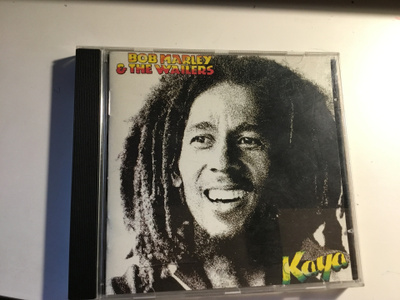
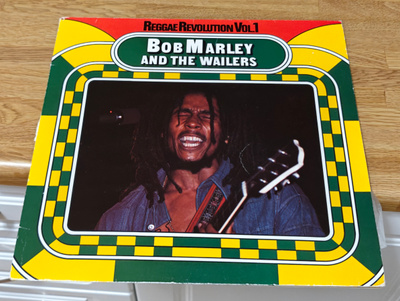
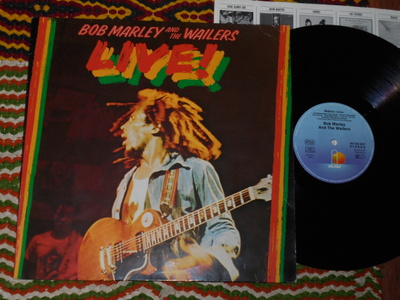
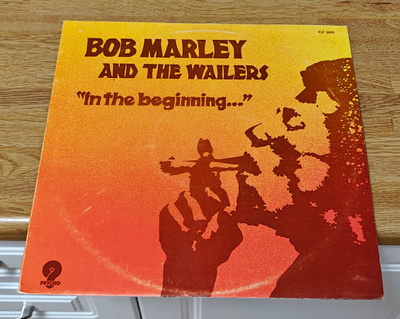
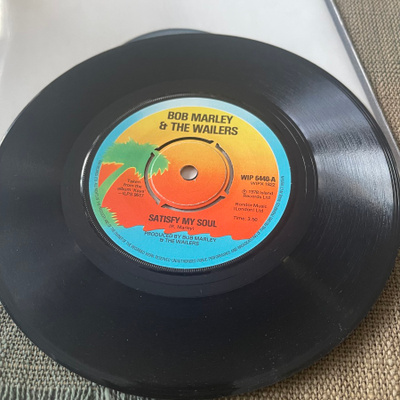
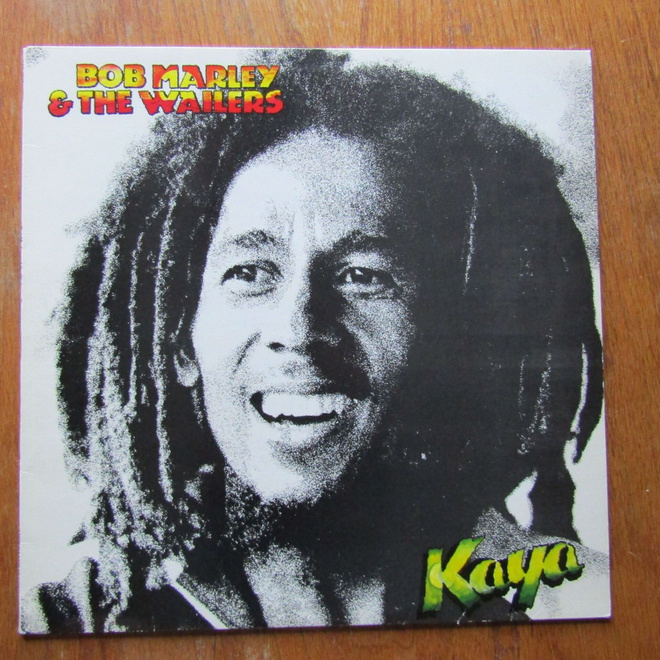
Bob Marley & The Wailers – Kaya (1978, EX/EX)
Huutokauppa
19,00 €
13pv 23h
Sulkeutuu
Kuvaus
Erinomaisessa kunnossa oleva Skandinavia-painos 1978.
Bob Marley & The Wailers – Kaya
Island Records – ILPS 9517
Scandinavia 1978
Roots Reggae
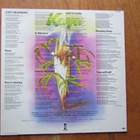
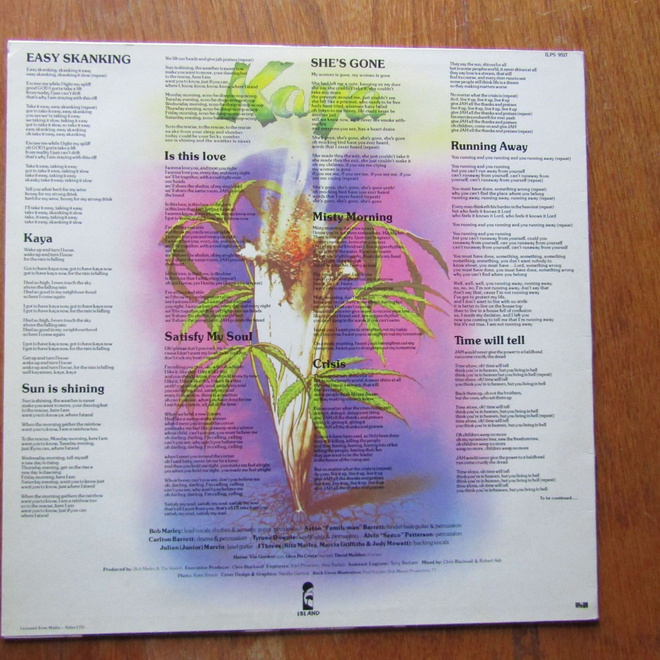
A1 Easy Skanking
A2 Kaya
A3 Is This Love
A4 Sun Is Shining
A5 Satisfy My Soul
B1 She's Gone
B2 Misty Morning
B3 Crisis
B4 Running Away
B5 Time Will Tell
Phonographic Copyright ? – Island Records Ltd.
Printed By – SIB-Tryck, Tumba
Licensed From – Media-Aides Ltd.
Published By – Rondor Music Ltd.
Backing Vocals – I Threes
Bass Guitar [Fender], Percussion – Aston "Family Man" Barrett
Design [Cover], Graphics – Neville Garrick
Drums, Percussion – Carlton Barrett
Engineer – Alex Sadkin, Karl Pitterson
Engineer [Assistant] – Terry Barham
Executive-Producer – Chris Blackwell
Illustration – Paul Smykle*
Keyboards, Percussion – Tyrone Downie
Lead Guitar – Julian (Junior) Marvin*
Lead Vocals, Rhythm Guitar, Acoustic Guitar, Percussion – Bob Marley
Mixed By – Chris Blackwell, Robert Ash
Percussion – Alvin "Seeco" Patterson
Photography By – Kate Simon
Producer – Bob Marley & The Wailers
Saxophone – Vin Gordon
Trumpet – David Madden, Glen Da Costa*
Written-By – R. Marley*
Kaya is the tenth studio album by the Jamaican reggae band Bob Marley and the Wailers, released in 1978.[1][2] The album consists of tracks recorded alongside those released on the Exodus album. It was produced by the Wailers.[3]
The album's release coincided with the One Love Peace Concert, heralding Marley's triumphant return to Jamaica from exile in London. Three of the songs are new versions of tracks from the 1971 album Soul Revolution Part II. Kaya reached the top five in the UK album charts. A 40th anniversary remix was released on 2 June 2018.[4]
Critical reception
Professional ratingsReview scores
Source Rating
AllMusic StarStarStarStar[5]
Christgau's Record Guide A?[6]
The Encyclopedia of Popular Music StarStarStarStar[7]
MusicHound Rock: The Essential Album Guide StarStarHalf star[3]
Lester Bangs, in Rolling Stone, wrote: "Musically, Kaya is a succession of the most tepid reggae clichés, pristinely performed and recorded, every last bit of tourist bait (down to the wood blocks) in place just like a Martin Denny record."[8] The Bay State Banner noted that "the Wailers take freely from Gamble & Huff's chords, Euro-disco's burping bass, and pop-soul ballads' blithe strings and synthesizers, but they funk up and condense these styles and use reggae's chicken scratch and snap-on drumming as disco employs congas: for a counter-voice to handle the unspeakable passions in a song."[9] Robert Christgau said, "If this is MOR, it's MOR like good Steely Dan—MOR with a difference." Christgau added, "Marley has sung with more apparent passion, it's true, but never more subtly, and his control of the shift in conception that began with Exodus is now absolute. He hasn't abandoned his apocalyptic vision—just found a day-to-day context for it."[6] The Globe and Mail opined that "Marley's reggae, expansive as always, has this time failed to integrate the Jamaican and American elements."[1
Robert Nesta ”Bob” Marley (kasteestaan 1981 alkaen Berhane Selassie; 6. helmikuuta 1945 Saint Ann, Jamaika – 11. toukokuuta 1981 Miami, Florida, Yhdysvallat) oli jamaikalainen laulaja-lauluntekijä, muusikko, rastafari-liikkeen tunnettu edustaja ja The Wailers -yhtyeen johtohahmo. Marley oli yksi jamaikalaisperäisen reggae-musiikin kehittäjistä ja sen kuuluisin esittäjä. Monet hänen tunnetuimmista lauluistaan ovat yhteiskunnallisesti kantaa ottavia, ja hänet tunnettiin myös afrikkalaisen vapautusliikkeen tukijana. Marley aloitti uransa 1960-luvulla ska-musiikilla, mutta varsinainen suosio kohtasi häntä vasta 1973 julkaistujen albumien Catch a Fire ja Burnin’ myötä. Marleyn tunnetuimpia kappaleita ovat muun muassa ”One Love”, ”No Woman, No Cry”, ”Could You Be Loved”, ”Get Up, Stand Up”, ”Exodus”, ”I Shot the Sheriff”, ”Redemption Song” ja ”Buffalo Soldier”. Marley kuoli syöpään vuonna 1981.
Myyjä
Toimitus ja maksu
Huutohistoria
Ei huutoja vielä.