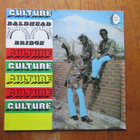
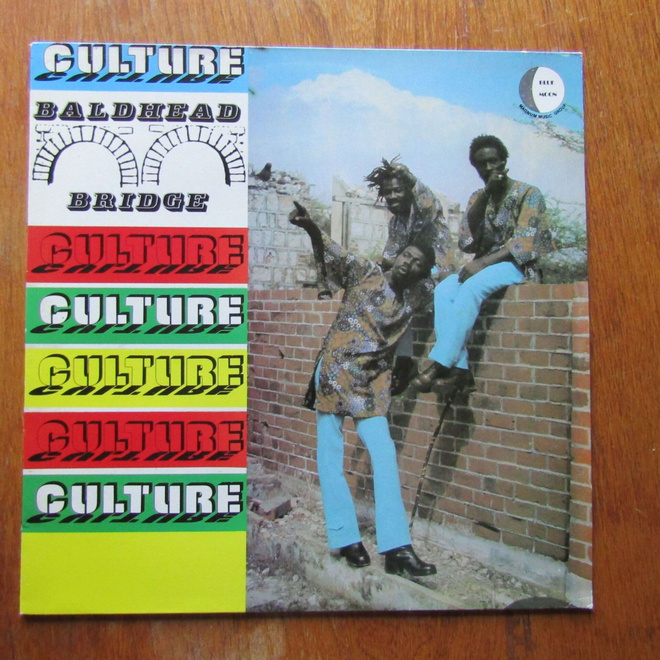
Culture – Baldhead Bridge (1983, roots reggae, EX/EX, upea!)
Huutokauppa
16,00 €
13pv 23h
Sulkeutuu
Kuvaus
Erinomaisessa kunnossa oleva hieno LP. Yhtyeen toinen pitkäsoitto, todellinen klassikko!
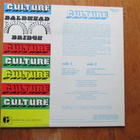
Culture – Baldhead Bridge
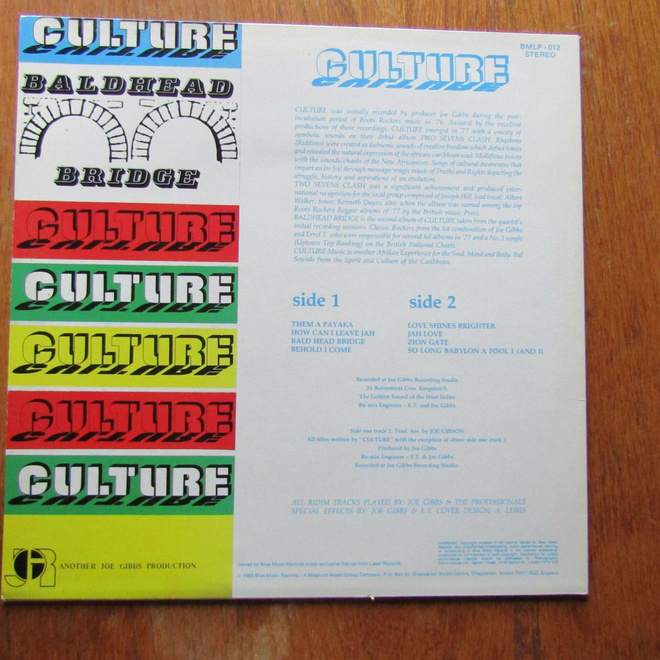
Blue Moon – BMLP 012, Blue Moon – BMLP-012
UK 1983
Reggae Roots Reggae
A1 Them A Payaka
A2 How Can I Leave Jah
Arranged By [Traditional] – Joe Gibson*
A3 Bald Head Bridge
A4 Behold I Come
B1 Love Shines Brighter
B2 Jah Love
B3 Zion Gate
B4 So Long Babylon A Fool I (And I)
Kuulostaapi tältä: https://www.youtube.com/watch?v=1njNiK0oABc&list=PLDNnrH9LH9sqCvvMcetNW1buBFYuvN9ZF
Baldhead Bridge is the second album by the Jamaican roots reggae band Culture, released on Joe Gibbs Records in 1978.[1][2]
Production
As with the band's debut, Two Sevens Clash, the album was recorded in Kingston at the studio of Joe Gibbs, who also produced the album.[3]
The band accompanying the trio was the Professionals, which included musicians such as Sly and Robbie, Tommy McCook, and Bobby Ellis.
AllMusic called the album "a true reggae classic," writing that "listeners are reminded of the impact that the Delfonics, the Impressions and other soul favorites had on reggae."[4] Record Collector praised the "outrageously brutal" dub version of the album.
Culture are a Jamaican roots reggae group founded in 1976. Originally they were known as the African Disciples. The one constant member until his death in 2006 was Joseph Hill.
History
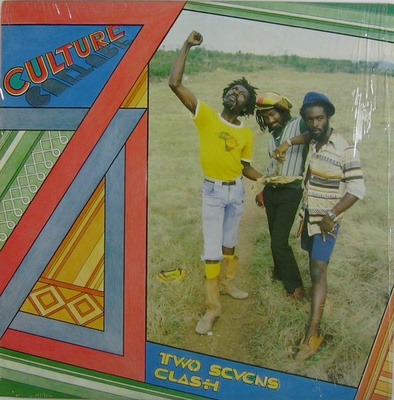
The group formed in 1976 as the vocal trio of Joseph Hill (formerly a percussionist in Studio One house band the Soul Defenders), his cousin Albert "Ralph" Walker, and Roy "Kenneth" Dayes, initially using the name The African Disciples.[1] Roy Dayes also used the name "Kenneth Paley", which is the name that appears on the Culture records released by Virgin Records.[2] The African Disciples soon changed their name to Culture, and auditioned successfully for the "Mighty Two": producer Joe Gibbs and engineer Errol Thompson.[1] While at Gibbs' studio, they recorded a series of singles, starting with "See Dem a Come" and including "Two Sevens Clash" (which predicted the apocalypse on 7 July 1977), many of which ended up on their debut album Two Sevens Clash.[3][4][5] The song was sufficiently influential that many in Kingston stayed indoors on 7 July, fearing that the prophecy would come true.[6] A second Gibbs-produced album, Baldhead Bridge, followed in 1978, by which time the group had moved on to record for producer Sonia Pottinger.[3] The group entered into a long-running dispute with Gibbs over royalties to the first album.
Two Sevens Clash meanwhile had become a big seller in the United Kingdom, popular with punk rock fans as well as reggae fans and boosted by the support of John Peel on his BBC Radio 1 show, and reached number 60 on the UK Albums Chart in April 1978.[6][7][8] This prompted Virgin Records to sign the group to its Front Line label, releasing Harder than the Rest (1978) and International Herb (1979).[1] Culture also released records on other labels in Jamaica, including a dub version of Harder than the Rest, Culture in Dub (1978, High Note), and an album of different recordings of the same album, Africa Stand Alone (April 1978).[1] An album recorded for Pottinger in 1979 with a working title of Black Rose remained unreleased until tracks emerged in 1993 on Trod On.[1]
Culture performed at the One Love Peace Concert in 1978.[7]
In 1981 the three singers went their own ways.[9] Hill carried on using the Culture name, and recorded the Lion Rock album, which was reissued in the United States by Heartbeat Records.[1] Hill and his new band recorded a session for long time supporter John Peel in December 1982, and the group went on to record further studio sessions for Peel in 1998 and 2002, and their performance at the Royal Festival Hall in July 1998 was broadcast on his show.[10] For their part, Walker and Dayes recorded a handful of songs on their own; a few of which turned up on an album titled Roots & Culture. Hill performed at the Reggae Sunsplash festival in 1985 and in 1986 the original line-up reformed to record two highly regarded albums – Culture in Culture and Culture at Work.[1]
Several albums followed in the 1990s on Shanachie Records and Ras Records, often recorded with Sly and Robbie, with Dayes leaving the group again around 1994, with Reginald Taylor replacing him.[1][11][12] Dayes subsequently worked as a solo artist under the name Kenneth Culture.[13]
By 2001 Telford Nelson had replaced Taylor.[14][15]
Joseph Hill, who came to symbolise the face of Culture, died in Berlin, Germany on 19 August 2006 while the group was on tour, after collapsing following a performance.[16] His son, Kenyatta Hill, who had acted as the group's sound engineer on tour, performed with his father's band at the Western Consciousness show in 2007, which was dedicated to Joseph Hill, and became the lead singer of Culture; Walker and Nelson continue to provide backing vocals.[17][18][19]
In 2011, Live On was released, featuring Kenyatta's performances of his father's songs, including "Two Sevens Clash" and "International Herb".[19]
Myyjä
Toimitus ja maksu
Huutohistoria
Ei huutoja vielä.