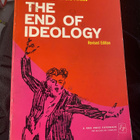
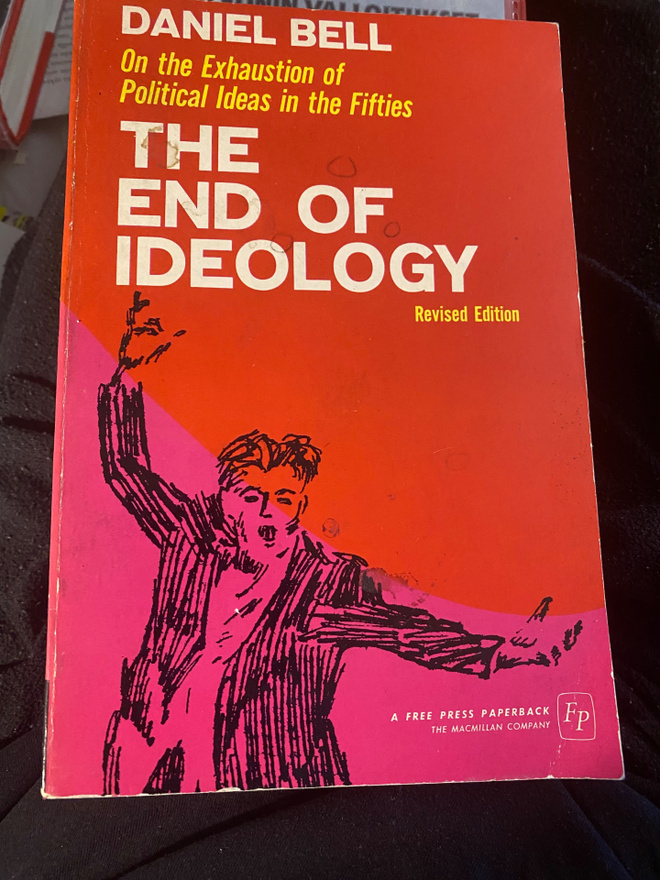
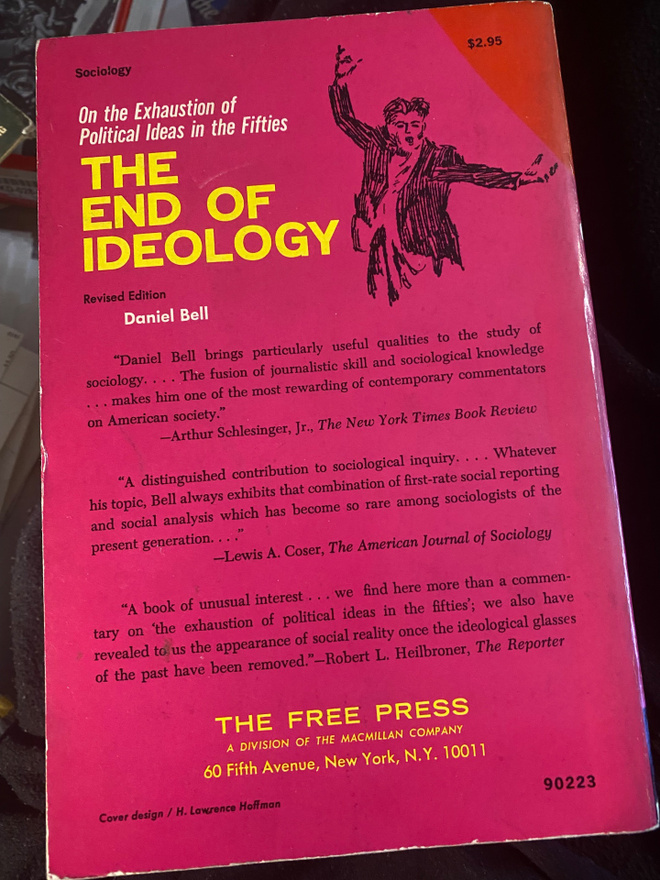
Daniel Bell: The End of Ideology
Osta heti
Sulkeutuu: 70pv 8h12,00 €
Kuvaus
Revised ed. 1965, pehmeäkantinen, 474 sivua, alussa ja lopussa kaksi merkintää.
Named by the Times Literary Supplement as one of the 100 most influential books since the end of World War II, The End of Ideology has been a landmark in American social thought, regarded as a classic since its first publication in 1962. Daniel Bell postulated that the older humanistic ideologies derived from the nineteenth and early twentieth centuries were exhausted, and that new parochial ideologies would arise. In a new introduction to the year 2000 edition, he argues that with the end of communism, we are seeing a resumption of history, a lifting of the heavy ideological blanket and the return of traditional ethnic and religious conflicts in the many regions of the former socialist states and elsewhere.
The End of Ideology: On the Exhaustion of Political Ideas in the Fifties is a collection of essays published in 1960 (New York, 2nd ed. 1962) by Daniel Bell, who described himself as a "socialist in economics, a liberal in politics, and a conservative in culture." He suggests that the older, grand-humanistic ideologies derived from the nineteenth and early twentieth centuries had been exhausted and that new, more parochial ideologies would soon arise. He argues that political ideology has become irrelevant among "sensible" people and that the polity of the future would be driven by piecemeal technological adjustments of the extant system.[1] With the rise of affluent welfare states and institutionalized bargaining between different groups, Bell maintains, revolutionary movements which aim to overthrow liberal democracy will no longer be able to attract the working classes.