Germany 1866-1945, The German War 1939-45
Kuvaus
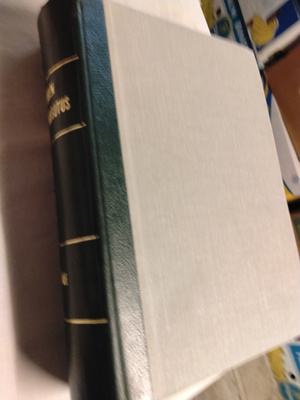
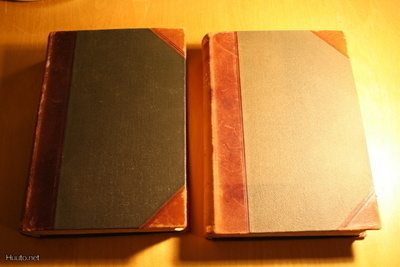
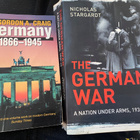
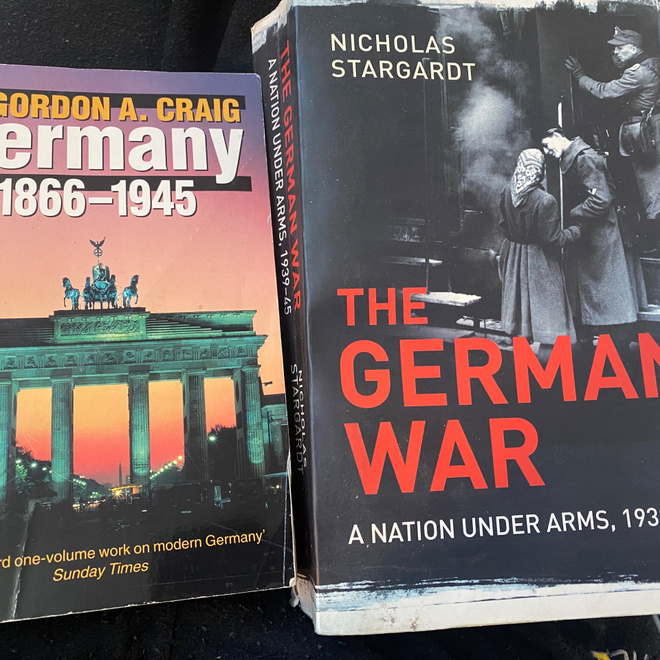
Kaksi Saksan historiaa käsittelevää, kirjaa. hiukan kulumaa.
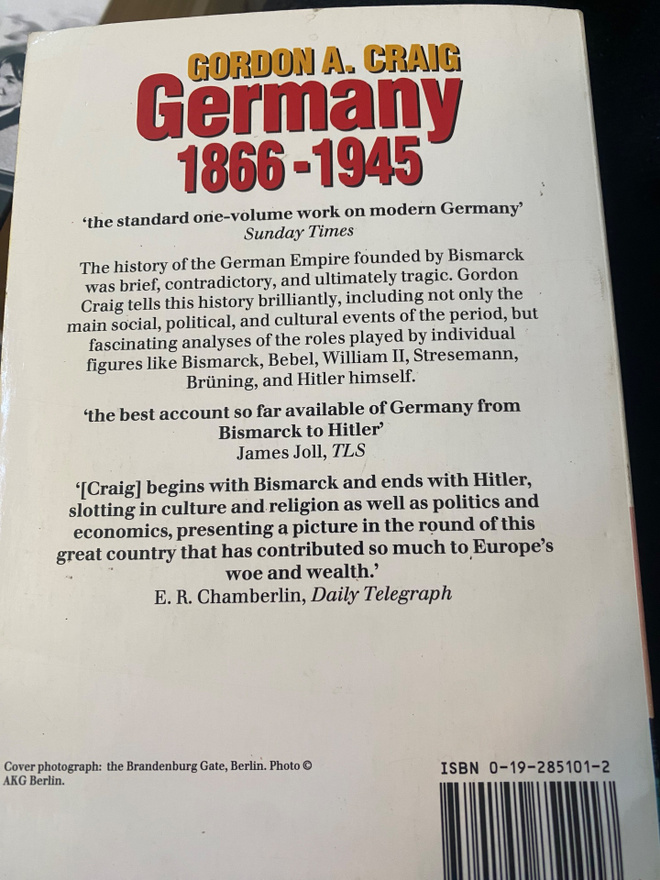
Gordon A. Craig: Germany 1866-1945. 1978/1981, 825 sivua,
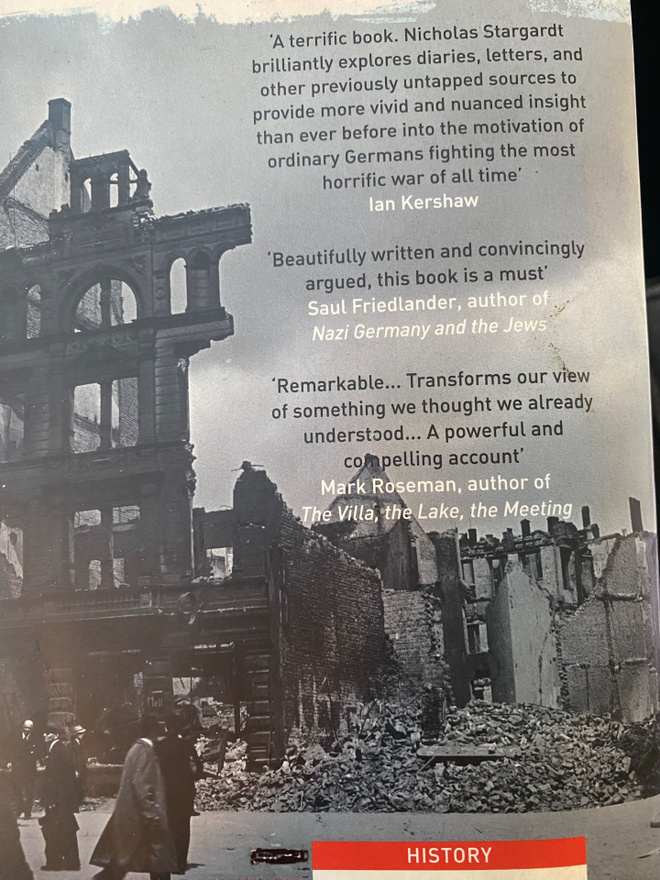
Nicholas Stargardt: German War A Nation Under Arms 1939-45. 2015, 704 sivua. Selkämyksessä palkeenkieli.
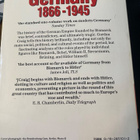
G.A. Craig, author of several distinguished books including The Politics of the Prussian Army 1640-1945 ('55), has written a magisterial history of Germany from Prussia's 1866 triumph over Austria at Koeniggroetz to the destruction of the 3rd Reich in 1945. His story focuses upon the two dominating personalities of the period: Bismarck, the "great star" whose genius & penetration are undeniable, but whose achievement "had its 'night side' as well as its 'day side,'" & Hitler, who, unlike the Iron Chancellor, was "sui generis a force without a real historical past." Craig agrees with Dahrendorf (Society & Democracy in Germany) that, paradoxically, it was precisely because he lacked roots in tradition that Hitler could destroy the major obstacle to its progress towards a liberal modernity--"the conservative-militaristic concern that had dominated politics in the Wilhelmine period, done everything possible to shorten the life of the Weimar Republic & elevated him to power in 1933." The concentration on these two figures in no way represents a failure to appreciate institutional, economic & social factors of development. A major part of the story--the place & treatment of women under the Empire, Weimar & Hitler--receives an overdue coherent treatment as do religion & education. Craig (J.E. Wallace Sterling Professor of the Humanities, Stanford) displays an equally keen appreciation of the role of culture. In particular, he forcefully portrays the flight from political responsibility which was characteristic of most artists & intellectuals under the Empire & which marred the splendid cultural achievements of Weimar as well. The combination of his learning with his gracefully lucid style has yielded a work of historical synthesis more readable & better organized than any book of comparable scope.--Kirkus (edited)
A groundbreaking history of what drove the Germans to fight -- and keep fighting -- for a lost cause in World War II
In The German War, acclaimed historian Nicholas Stargardt draws on an extraordinary range of firsthand testimony -- personal diaries, court records, and military correspondence -- to explore how the German people experienced the Second World War.
When war broke out in September 1939, it was deeply unpopular in Germany. Yet without the active participation and commitment of the German people, it could not have continued for almost six years. What, then, was the war the Germans thought they were fighting? How did the changing course of the conflict -- the victories of the Blitzkrieg, the first defeats in the east, the bombing of German cities -- alter their views and expectations? And when did Germans first realize they were fighting a genocidal war?
Told from the perspective of those who lived through it -- soldiers, schoolteachers, and housewives; Nazis, Christians, and Jews -- this masterful historical narrative sheds fresh and disturbing light on the beliefs and fears of a people who embarked on and fought to the end a brutal war of conquest and genocide.