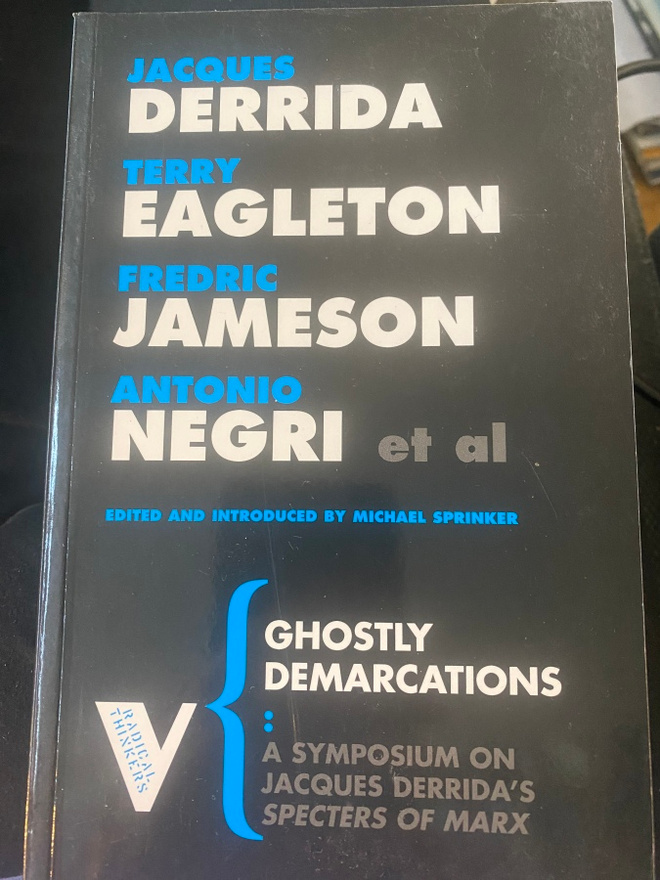
Jacques Derrida et. Al.: Ghostly Demarcations
Osta heti
Sulkeutuu: 46pv 14h15,00 €
Kuvaus
Verso 1999/2008. 278 sivua,
Fredric Jameson, Antonio Negri, Terry Eagleton, Pierre Macherey and others engage in a debate on Marx with Jacques Derrida.
With the publication of Specters of Marx in 1993, Jacques Derrida redeemed a longstanding pledge to confront Marx's texts directly and in detail. His characteristically bravura presentation provided a provocative re-reading of the classics in the Western tradition and posed a series of challenges to Marxism.
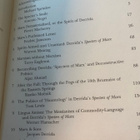
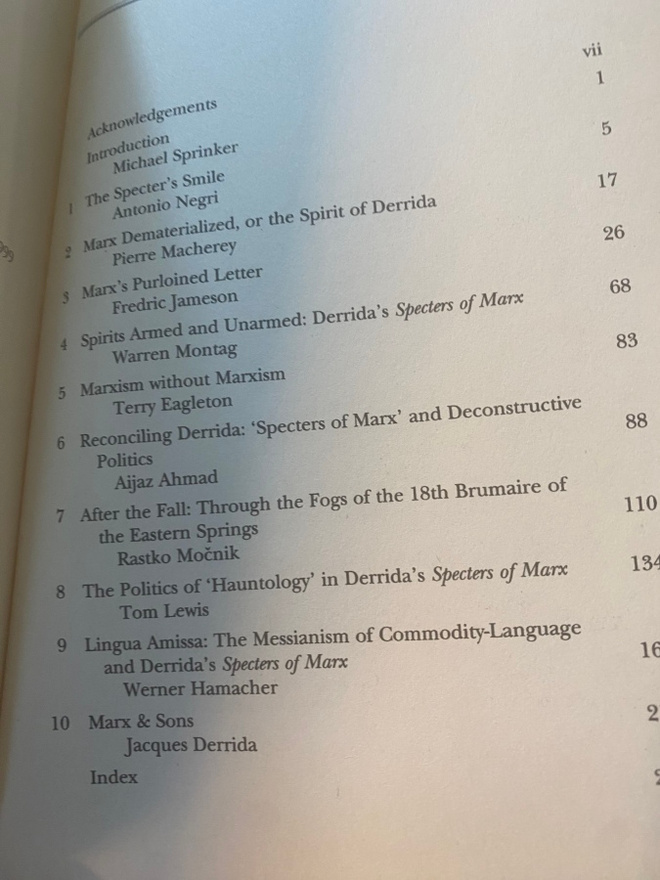
In a timely intervention in one of today's most vital theoretical debates, the contributors to Ghostly Demarcations respond to the distinctive program projected by Specters of Marx. The volume features sympathetic meditations on the relationship between Marxism and deconstruction by Fredric Jameson, Werner Hamacher, Antonio Negri, Warren Montag, and Rastko Mocnik, brief polemical reviews by Terry Eagleton and Pierre Macherey, and sustained political critiques by Tom Lewis and Aijaz Ahmad. The volume concludes with Derrida's reply to his critics in which he sharpens his views about the vexed relationship between Marxism and deconstruction.
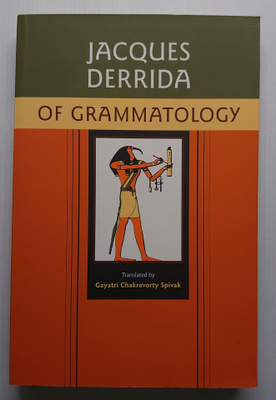
Jacques Derrida was a French philosopher best known for developing deconstruction, a method of critical analysis that questioned the stability of meaning in language, texts, and Western metaphysical thought. Born in Algeria, he studied at the École Normale Supérieure in Paris, where he was influenced by philosophers such as Heidegger, Husserl, and Levinas. His groundbreaking works, including Of Grammatology (1967), Writing and Difference (1967), and Speech and Phenomena (1967), positioned him at the center of intellectual debates on language, meaning, and interpretation.
Derrida argued that Western philosophy was structured around binary oppositions—such as speech over writing, presence over absence, or reason over emotion—that falsely privileged one term over the other. He introduced the concept of différance, which suggests that meaning is constantly deferred and never fully present, destabilizing the idea of fixed truth. His work engaged with a wide range of disciplines, including literature, psychoanalysis, political theory, and law, challenging conventional ways of thinking and interpretation.
Throughout his career, Derrida continued to explore ethical and political questions, particularly in works such as Specters of Marx (1993) and The Politics of Friendship (1994), which addressed democracy, justice, and responsibility. He held academic positions at institutions such as the École des Hautes Études en Sciences Sociales and the University of California, Irvine, and remained an influential figure in both European and American intellectual circles. Despite criticism for his complex writing style and abstract concepts, Derrida’s ideas have left a lasting impact on contemporary philosophy, literary theory, and cultural criticism, reshaping the way meaning and language are understood in the modern world.