Moilanen:Marks of Fire, Value and Faith Swords with Ferrous
Kuvaus
Hyväkuntoinen ( K4 ) nide , Suomen keskiajan arkeologian seura 2015 , 463 sivua , kuvitettu , ISBN 978-952-67329-6-1 nidottu
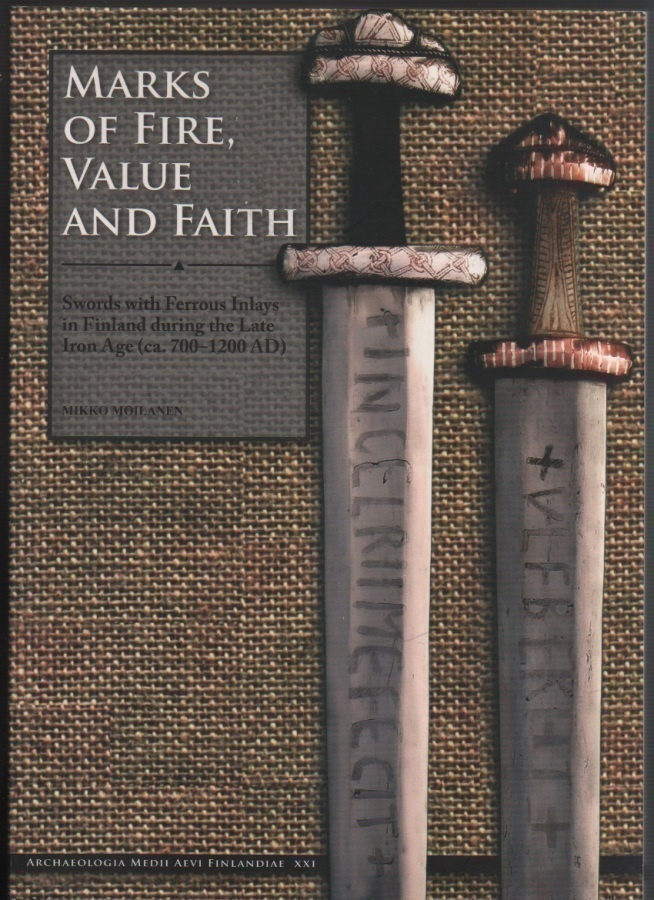
Nimi: Marks of Fire, Value and Faith : Swords with Ferrous Inlays in Finland during the Late Iron Age (ca. 700-1200 AD)
tämä on myös väitöskirjka ; alä pelästy taulukot yms voi ohittaa ja keskittyä juoneen
Tekijän kotisivu https://mikkomoilanen.fi/index_eng.html
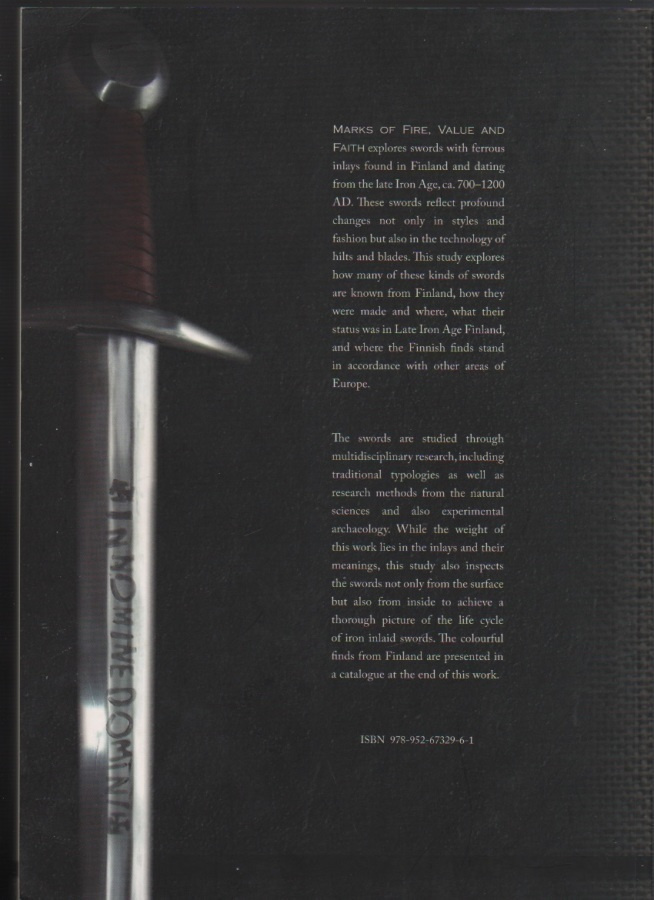
" This study explores swords with ferrous inlays found in Finland and dating from the late Iron Age, ca. 700-1200 AD. These swords reflect profound changes not only in styles and fashion but also in the technology of hilts and blades. This study explores how many of these kinds of swords are known from Finland, how they were made and where, what their status was in Late Iron Age Finland, and where the Finnish finds stand in accordance with other areas of Europe.
The various methods included measuring of the finds and statistics. The main method of revealing the inlaid marks was radiography due to its non-destructive nature. In cases where inlays were visible without radiography, their details were inspected via microscopy. To study the materials and manufacture of inlaid swords, a sample of them was metallographically analysed to determine the forging technologies and nature of used materials. Furthermore, the manufacture was also studied with experimental approaches.
As a result, a catalogue of 151 swords with ferrous inlays was created. This number is relatively high compared with other European countries, although systematic studies have been conducted in only some countries. The inlaid motifs were classified into five distinct categories to help the classification. To summarize, almost every documented inlaid sword was unique in some respect including measurements, inlaid motifs and materials of blades and inlays. Technological variation was also present, some blades being poorer and some of higher quality in spite of the inlaid motifs. Misspelt inscriptions as well as letter-like marks were common in Finland and also in Scandinavia. Furthermore, the provenance of iron and steel used in some blades hints at Scandinavian ores.
The above observations, along with the experimental results indicating the existence of multiple alternative techniques of inlaying, suggest that these swords were manufactured locally in Scandinavia, most likely in imitation of Continental European models. Inlaid swords were valued partly for their assumed functionality in combat, as evidenced by damage on some examined blades, or they were valued for their inlays, which could have had fashionable or symbolical meanings bound to local beliefs. "
lue alempaa fennica-osuus , niin kirjan tiedot selviävät
Kuntoluokitus: (K5=uusi, K4=erinomainen, K3=hyvä, K2=tyydyttävä, K1=kehno)
Voittajalle postituskulut; raha tililleni ja kirjapaketti / kirje postiin !
Muut kohteeni näet tästä linkistä!
Fennica-tiedot alla :
Marks of Fire, Value and Faith : Swords with Ferrous Inlays in Finland during the Late Iron Age (ca. 700-1200 AD)
Väitöskirja
Moilanen, Mikko, kirjoittaja
Suomen keskiajan arkeologian seura 2015.
englanti
Alkuteoksen kieli
englanti
JulkaistuTurun yliopisto : Suomen keskiajan arkeologian seura 2015.
OpinnäyteVäitöskirja : Turun yliopisto,
SarjaArchaeologia Medii Aevi Finlandiae, ISSN 1236-5882; 21.
Aiheet
ISBN
978-952-67329-6-1 nidottu