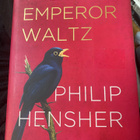
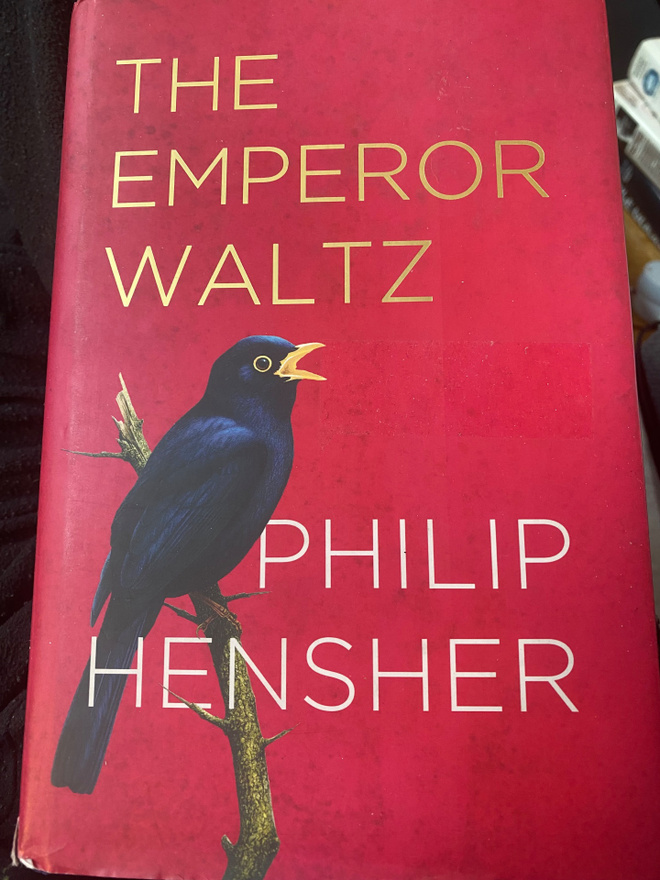
Philip Hensher: The Emperor Waltz
Kuvaus
Monen aikatason romaani. 624 pages, Hardcover
First published July 3, 2014
The new novel from Booker Prize-shortlisted Philip Hensher is his most ambitious and daring novel yet.
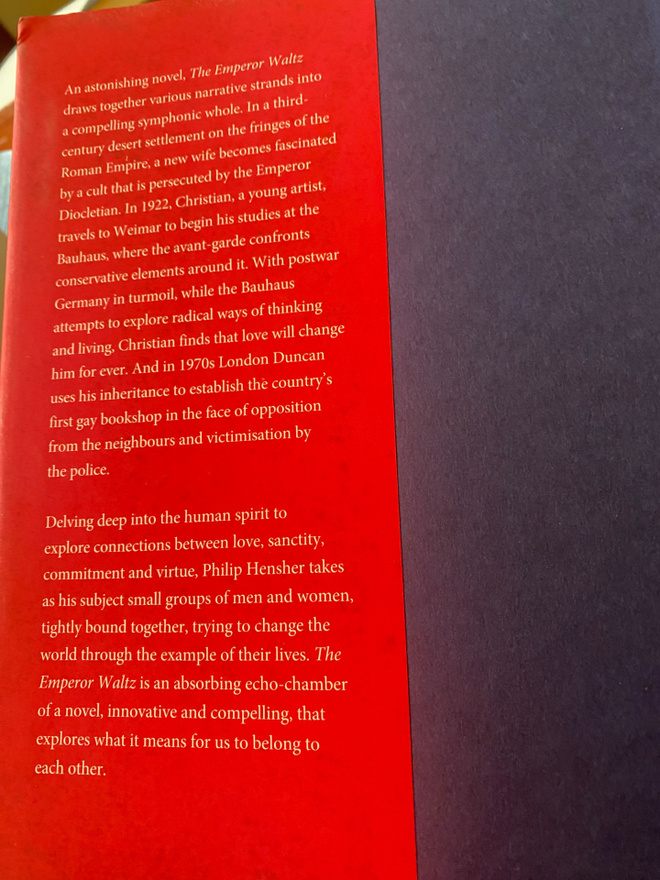
In a third-century desert settlement on the fringes of the Roman Empire, a new wife becomes fascinated by a cult that is persecuted by the Emperor Diocletian. In 1922, Christian, a young artist, travels to Weimar to begin his studies at the Bauhaus, where the avant-garde confronts conservative elements around it. With postwar Germany in turmoil, while the Bauhaus attempts to explore radical ways of thinking and living, Christian finds that love will change him for ever. And in 1970s London Duncan uses his inheritance to establish the country’s first gay bookshop in the face of opposition from the neighbours and victimisation by the police.
Delving deep into the human spirit to explore connections between love, sanctity, commitment and virtue, Philip Hensher takes as his subject small groups of men and women, tightly bound together, trying to change the world through the example of their lives. The Emperor Waltz is an absorbing echo-chamber of a novel, innovative and compelling, that explores what it means for us to belong to each other.
Philip Hensher is the author of the 2014 ambitious, decade-crossing novel The Emperor Waltz. The book interweaves three discrete narrative threads: early Christians facing persecution by the Emperor Diocletian in 3rd-century Rome, an artist navigating the Weimar Bauhaus in the 1920s, and a young man opening London’s first gay bookstore in the 1970s.
Thematically, the book explores how small, tight-knit groups of people with passionately held beliefs face suspicion and hostility from the larger, surrounding world.
The three distinct timelines cover:
3rd-Century Rome: A newlywed woman in a desert settlement on the fringes of the Empire becomes fascinated by a persecuted religious cult.
1920s Germany: A young artist named Christian travels to Weimar to study at the Bauhaus, encountering radical living alongside conservative hostility.
1970s London: Duncan Flannery uses his inheritance to open the country’s first gay bookshop, battling opposition from his neighbors and harassment by the police.