The French Connection - ranskalainen dance-kukttuuri
Kuvaus
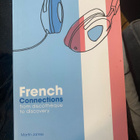
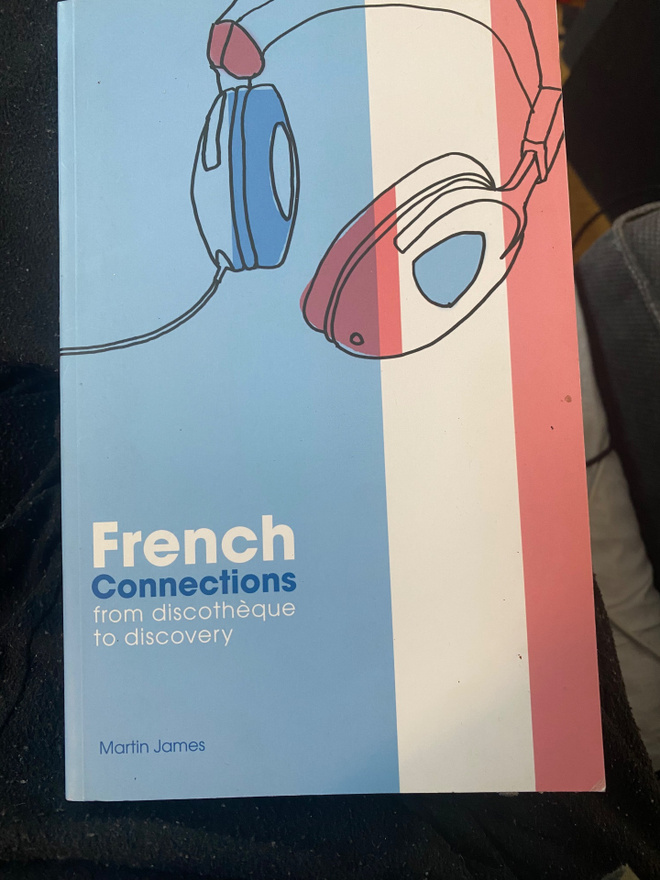
Martin James: French Connection From Discothèque To Discovery on kattava ja sisäpuoleltava tuleva kuvaus ranskalaisen dance-kulttuurin, diskon, nu jazzin, housen, dj-musiikin ja uuspopin sekä hiphopin noususta. Ensipainos 2003, 317 sivua. Kuin uusi mutta ex-omistajan lyijykynänimmari.
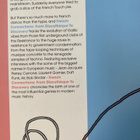
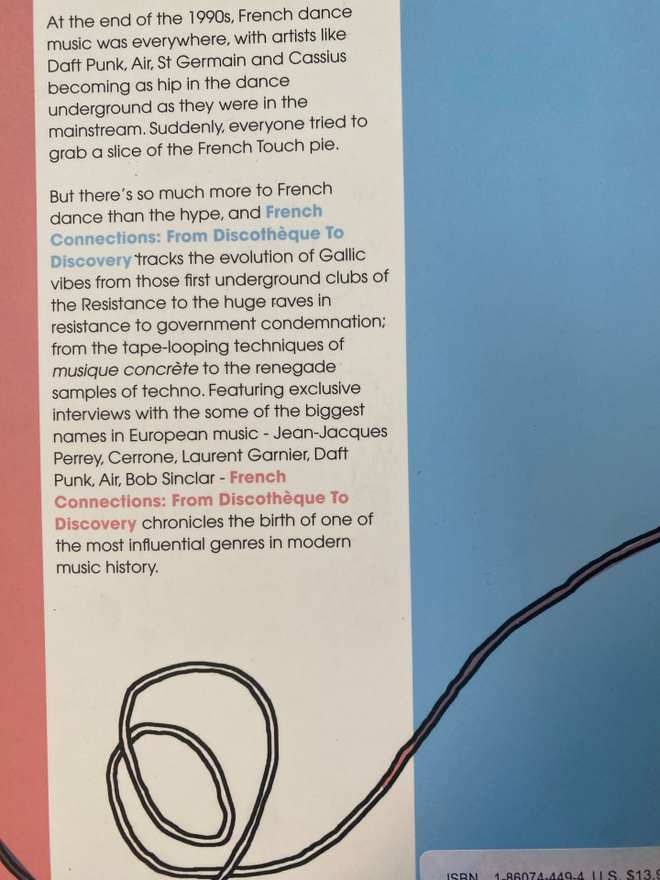
The book French Connections provides a comprehensive look at the French dance culture in its making. The empirical data of the book is comprised of interviews with important figures in French electronic music history and a range of sources as well as Martin James’ own experiences as an insider of the French dance music scenes. He himself coined the term “French Touch,” which is not only a genre-like definition of French dance music emerging in the second half of the 1990s but also an allusion to the rising French impact on the international dance music culture. Whereas artists like Daft Punk, Air, and Bob Sinclair were the main actors behind French Touch, James acknowledges that their music was the result of the experiments in the electronic music production of preceding decades.
The train of time that leads us to French Touch has many stops: From discotheque culture to musique concrete; from experiments with Ondioline and Moog to rave culture and techno parades. Every stop has its own places to visit and songs to hear, sometimes with their makers narrating their own journeys.
While the discotheques of the Second World War provide the historical context of the French relation to dance music, musique concrete acts as a source of a new sound aesthetic achieved by imaginative musical structuring and tape editing. Musique Concrete’s experiments with recorded sound, then, evolve into electro-pop, especially when Jean-Jacques Perrey combines the found sound with the Ondioline and the Moog synthesizers and “pushes the boundaries of electronic music for over four decades.” The way leading to the current electronic music scene in France branches off when it comes to techno, rave, and what Martin calls the French Touch. Defined as the French version of house music, French Touch blossoms at the backdrop of the government’s condemnation of the raves and as a closer relative to indie and hip hop cultures than rave and techno.