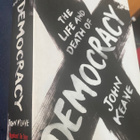
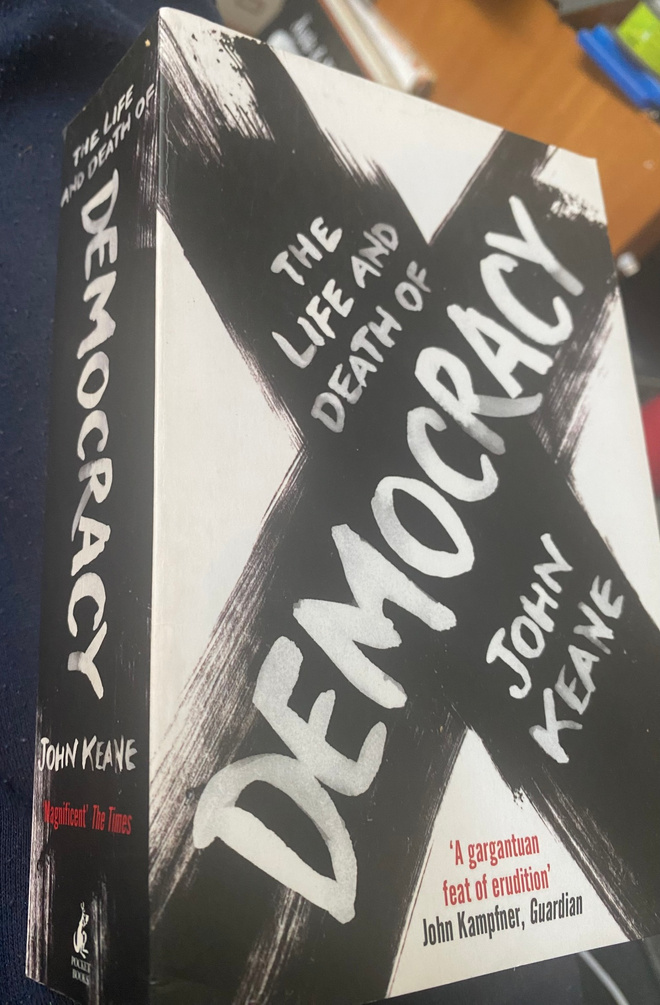
The Life and Death of Democracy - John Keane
Osta heti
Sulkeutuu: 71pv 9h10,00 €
Kuvaus
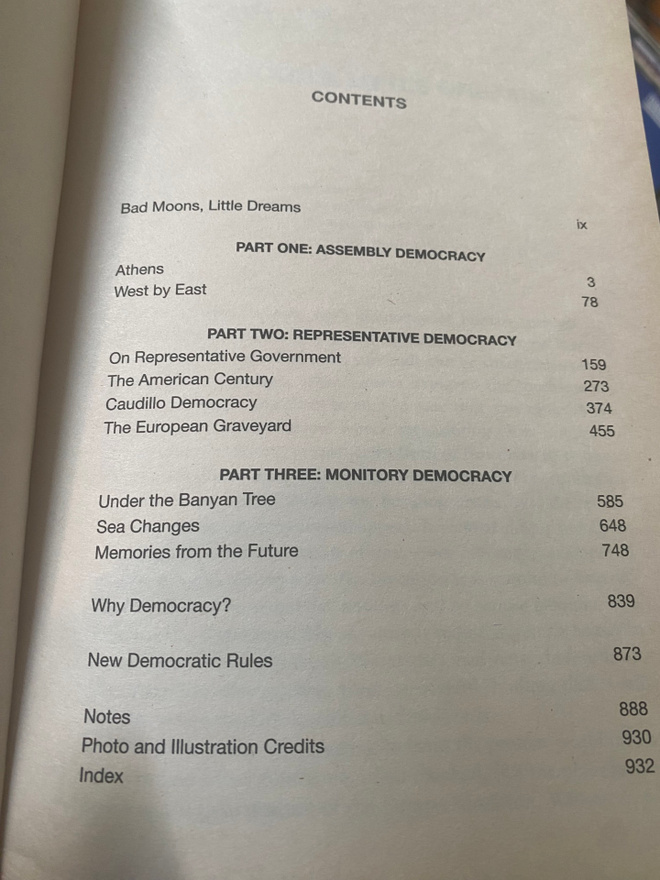
Jättimäinen englanninkielinen demokratian historia. 2009. Pehmeäkantinen. 958 sivua.
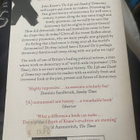
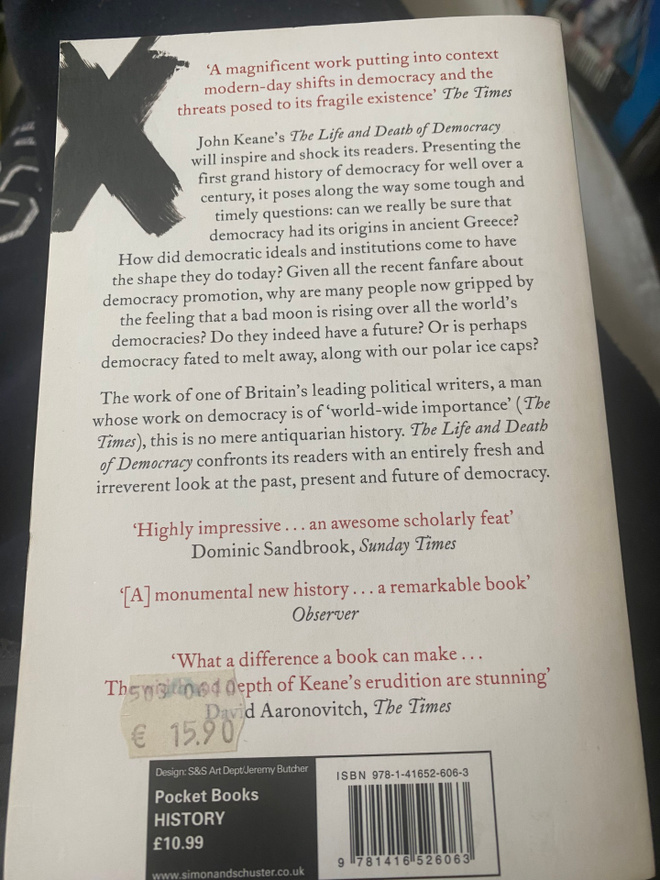
From Plato to de Tocqueville to Fukuyama?an epic history of the governing philosophy that has defined Western history.
In the grand tradition of Paul Kennedy’sThe Rise and Fall of the Great Powerscomes this provocative history of world democracy, which begins with the ancient Myceans and ends in our fractious present. Overturning long-cherished notions, John Keane poses challenging questions: Did democracy actually begin in ancient Greece or earlier in Mesopotamia? Do the American and British systems actually live up to their democratic ideals? Why is there a bad moon rising over the world’s democracies? Written by a leading political theorist, this book presents readers with a counterintuitive look at democracy’s past, present, and future, which Keane argues lies not in the West but in the turbulent democracies of the East, especially in India. Avoiding the triumphalism of global democracy’s most boisterous pundits, Keane cautions that democracy today is more fragile than ever and that, unless major corrective measures are taken, we may be sleepwalking our way into even deeper trouble.
John Keane (born 1949) is an Australian political theorist. He is a professor of politics at the University of Sydney.[1] For 25 years he also held a position at the Wissenschaftszentrum Berlin(WZB),[2] which he resigned from in November 2023.[3]
Born in southern Australia, John Keane is Professor of Politics at the University of Sydney. He first studied Politics, Government and History at the University of Adelaide, winning the Tinline Prize for a First Class Honours with Highest Distinction (1971). He won a Commonwealth Fellowship to study at the University of Toronto, where in the fields of philosophy and political economy he was awarded a doctorate and mentored and supervised by C.B. Macpherson. He later held a post-doctoral fellowship at King’s College, at the University of Cambridge, where he worked closely with Anthony Giddens, Quentin Skinner and other leading scholars.