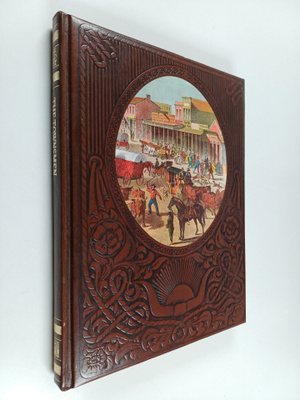
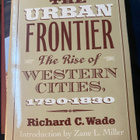
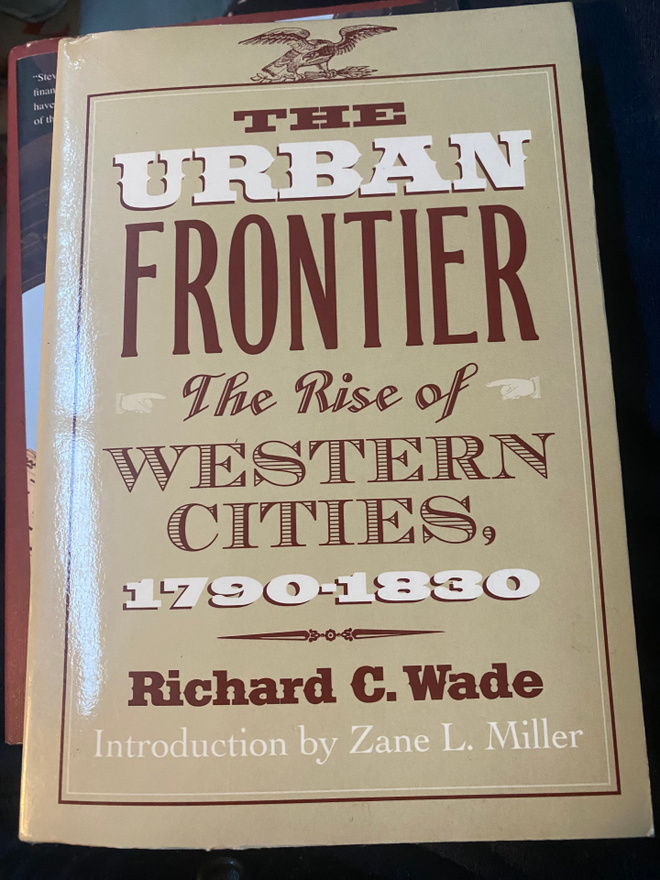
The Urban Frontier. The Rise of Western Cities 1790-1830
Osta heti
Sulkeutuu: 65pv 3h10,00 €
Kuvaus
Amerikan lännen kaupunkien historiaa.
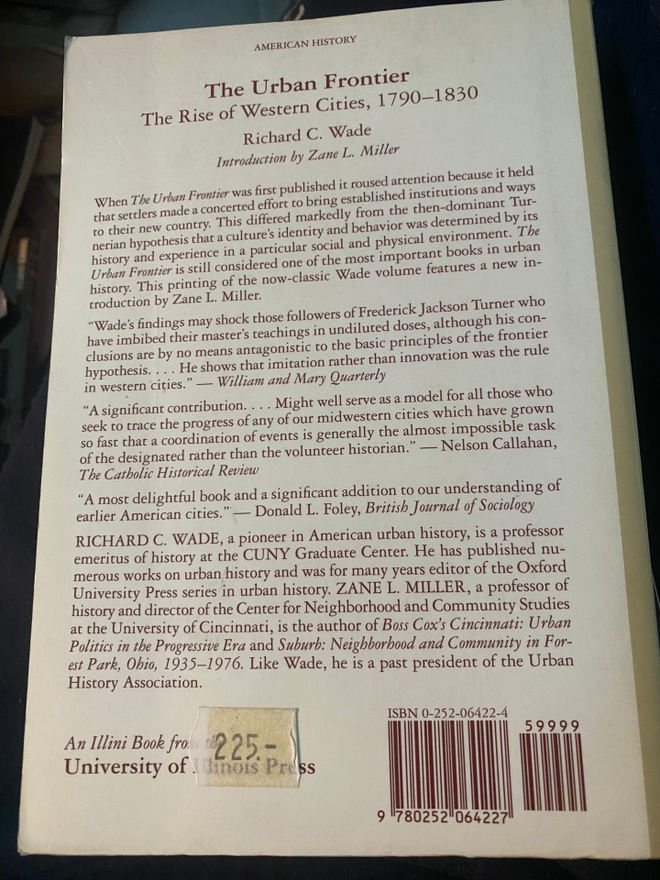
When The Urban Frontier was first published it roused attention because it held that settlers made a concerted effort to bring established institutions and ways to their new country. This differed markedly from the then-dominant Turnerian hypothesis that a culture's identity and behavior was determined by its history and experience in a particular social and physical environment. The Urban Frontier is still considered one of the most important books in urban history. This printing of the now-classic Wade volume features a new introduction by Zane L. Miller.
7
"The Urban Frontier" primarily refers to The Urban Frontier: The Rise of Western Cities, 1790–1830, a classic 1959 history book by Richard C. Wade. It can also describe general concepts in urban studies regarding city expansion, or tie into related works like Neil Smith's The New Urban Frontier: Gentrification and the Revanchist City. [1, 2, 3, 4]
Richard C. Wade's Book
Focuses on early American cities like Cincinnati, Louisville, Pittsburgh, Lexington, and St. Louis.
Argues that cities were planted early in the West and acted as the spearhead of frontier settlement.
Challenges the older Turner thesis by showing settlers brought eastern institutions and urban ways westward rather than reinventing society from scratch. [1, 2, 3, 4]
General Urban Studies Concept
Refers to shifting zones of capital investment, redevelopment, and social struggle on the edges of urban cores.
Explores how city peripheries, suburbs, or neglected inner-city spaces become the new boundaries for economic and political contest